
We are influencers and brand affiliates. This post contains affiliate links, most which go to Amazon and are Geo-Affiliate links to nearest Amazon store.
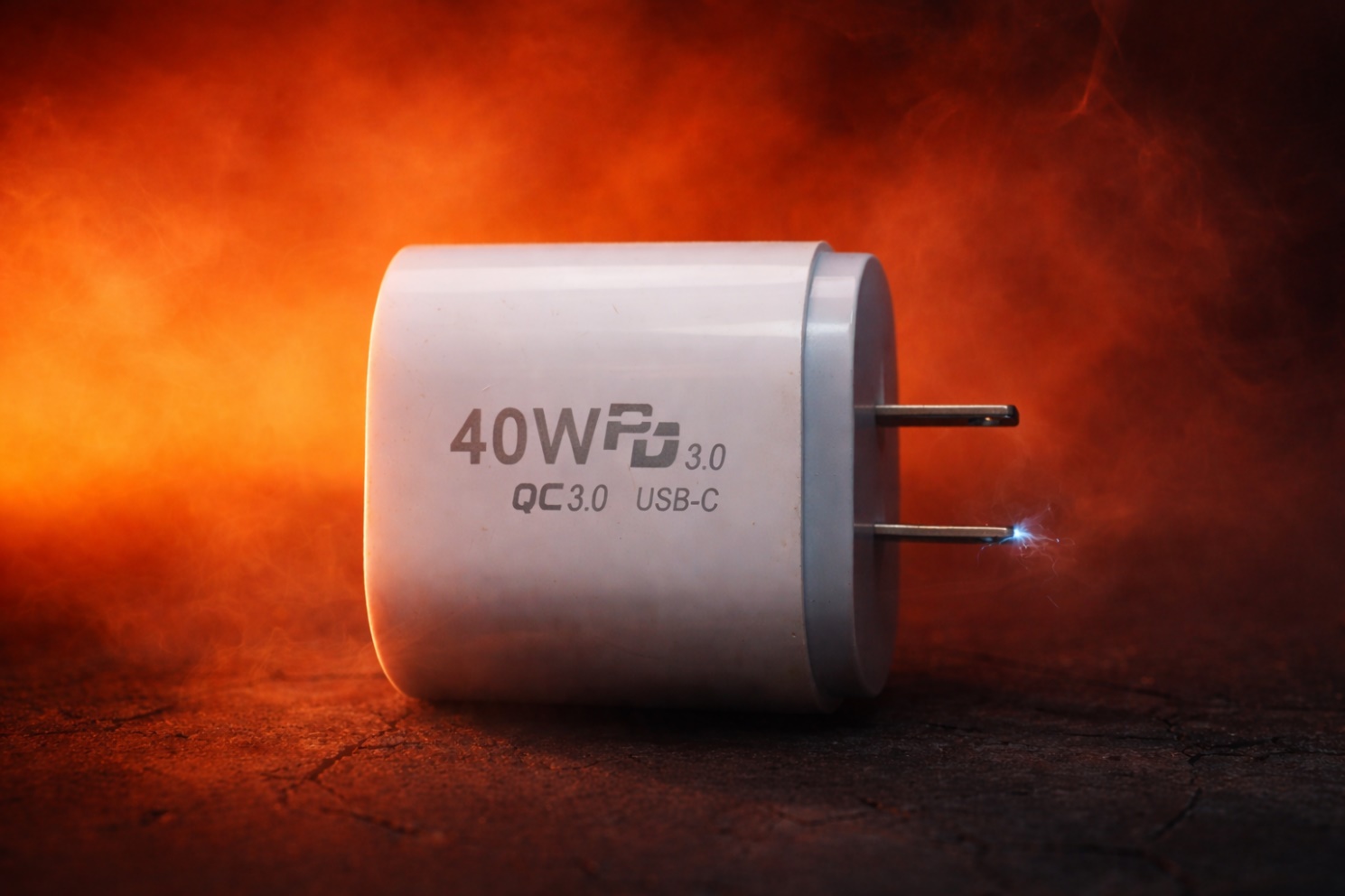
You might think a charger’s only job is to power up your device. And yes, that’s its main purpose. But inside, there are components designed to make sure the charging process is safe and does not harm your device or you.
When you use a generic charger, you expose yourself to potentially dangerous issues like overvoltage and short circuits. Unfortunately, some people have been involved in serious and even fatal accidents due to chargers with low safety standards.
The reason is simple. When a generic charger fails, it can allow more current to pass through than your device can handle. As you probably know, a household outlet can easily supply up to 15 amps at 120 volts, about 1,800 watts, in many countries, or even more in 220 to 240 volt installations. That is enough to cause overheating, fires, or electric shock.
The last thing you want is all that energy going through your body. No one wants an electric shock of that magnitude.
Now, just because a charger is cheap does not automatically mean it is unsafe. However, in most cases, these chargers tend to be very inefficient when it comes to delivering their advertised power in a stable and secure way.
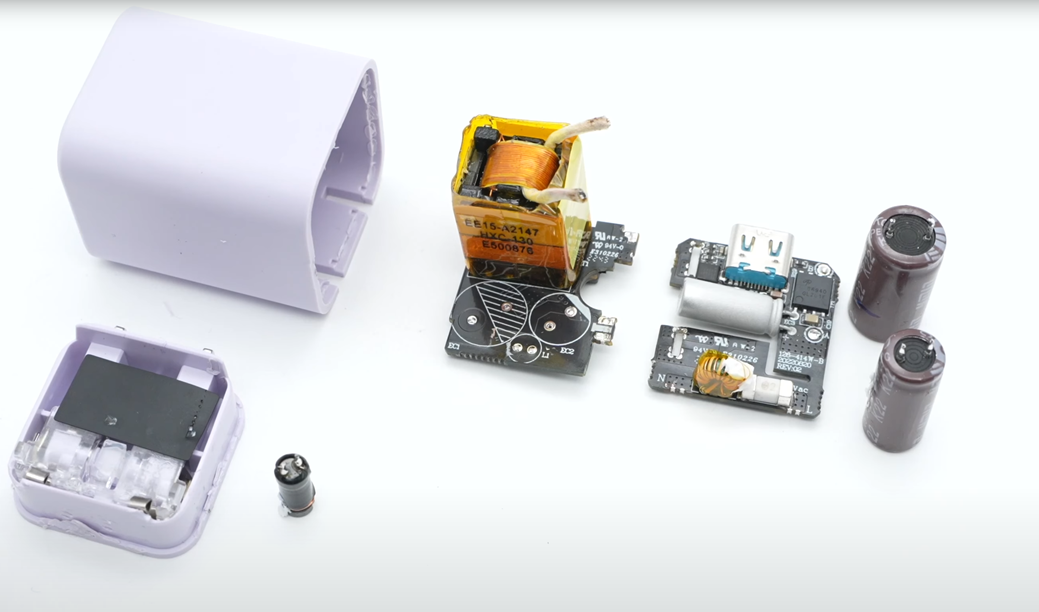
This is the case with the 40W charger we are presenting today. We inspected its internal components to see whether it is truly designed to deliver the 40 watts it claims, and to analyze some of the reasons why it might not be as safe as it appears.
We also recommend two well priced chargers that offer fast charging for your phone and, most importantly, a solid safety system.
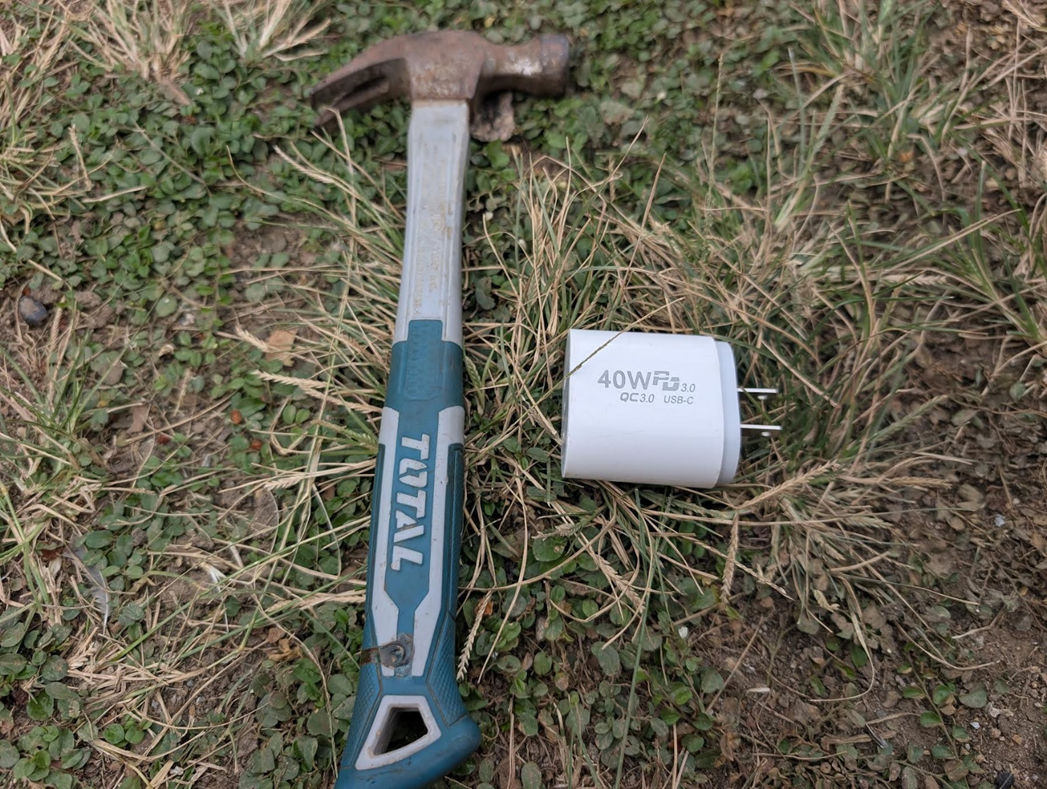
I had forgotten my proper tools to open the charger, so I used my old hammer to test its impact resistance as well. It only took one hit to split it into three pieces.
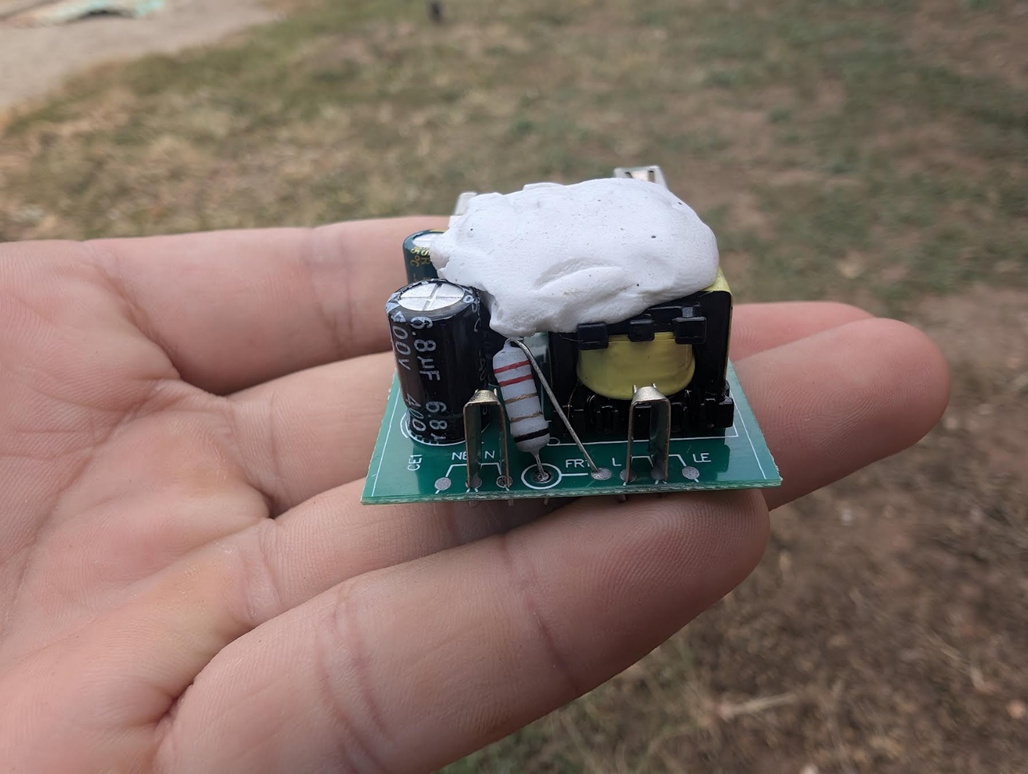
At first glance, I noticed a large amount of white paste. That is actually a thermal compound designed to dissipate heat and prevent overheating. It is different from what GaN chargers use, but it is still adequate to prevent most temperature related problems. There is also a cut in the PCB that helps improve insulation between the primary and secondary sides.
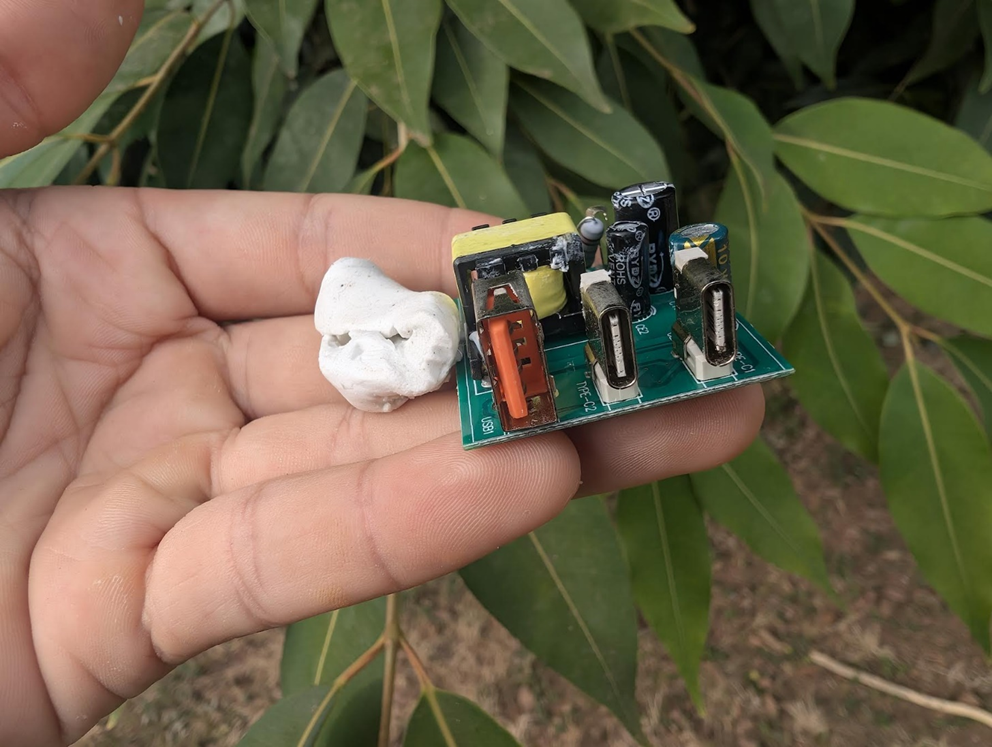
The main problem with this charger is that the capacitors are undersized for a 40W output. No serious manufacturer would use only 13.6 microfarads in the primary stage. For example, the Anker Nano 30W uses two 22 microfarad capacitors in its primary stage.
So yes, this charger cannot consistently deliver 40 watts, at least not from one of its USB C ports. That was one of the biggest issues I found during testing.
Modern phones typically use a system called USB Power Delivery, which negotiates power levels to ensure the battery is charged safely. If there are voltage fluctuations, instability, or too much electrical noise, the device simply will not accept fast charging. Instead, it drops down to low power levels like 5W or even less, far below the 20W or 30W range considered fast charging. At 5W, charging a phone can take hours.
On top of that, phones from Google and Samsung often use an even stricter system called Programmable Power Supply. This may be one of the main reasons generic chargers do not fast charge properly, even when they technically claim to support it.
A poorly designed charger that introduces electrical noise can degrade a phone’s battery and even damage the display over time. Imagine ruining a phone that cost hundreds of dollars just to save ten dollars on a charger you will use every day for years.
Is saving a few bucks really worth the risk?
After reading this, you will probably think twice. While this charger is not the worst we have seen, it is still very inefficient, and we have no way of knowing the true quality of its components. We can only judge what we see.
Our recommendation is simple. For the best compatibility and safety, choose a truly reliable charger. We have tested many, so we can confidently recommend the Anker Nano 30W or, if your device supports higher power, the Anker Nano 45W. They are excellent chargers because they are ultra compact, foldable, and support fast charging.
If you are curious, this is what the inside of the Anker Nano 30W looks like. It is far more robust than the cheap generic charger I inspected on my own. Anker takes protection to the next level with its proprietary ActiveShield 2.0 technology, which monitors the charger’s temperature more than three million times per day.
Next, we would recommend two Anker chargers that include a certified USB C charging cable. But whether you choose those or not, always make sure you pick a certified charger for your own safety and the safety of your devices.
Click to get the Anker Nano 30W or click here to get the Anker Nano 45W
We are influencers and brand affiliates. This post contains affiliate links, most which go to Amazon and are Geo-Affiliate links to nearest Amazon store.

My name is Joel! I love to read, I go to university like most people my age.
In my free time I usually train boxing, I love music, I also know how to play the guitar and the harmonica.