
We are influencers and brand affiliates. This post contains affiliate links, most which go to Amazon and are Geo-Affiliate links to nearest Amazon store.
Few things derail a morning faster than not knowing where your keys went. The same problem can happen at the airport with luggage, at the office with a backpack, or at home with a bag that somehow ended up in a room you already checked twice. Small everyday items are easy to misplace, and retracing your steps is not always enough to find them quickly.
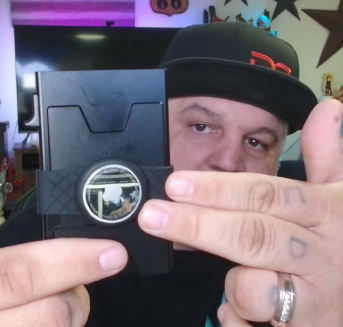
The Apple AirTag is designed to make those situations less stressful for people already using an iPhone or iPad. This small Bluetooth tracker works with Apple’s Find My network so you can attach or place it with an item and then check its location through the Find My app. The Amazon listing covered here is the first-generation single AirTag, model MX532LL/A, rather than the newer second-generation version.
Setup is intentionally simple. Bring the AirTag near a compatible iPhone or iPad and the device can be paired to your Apple Account with a few taps. You can give it a recognizable name such as Keys, Backpack, Camera Bag, or Luggage so it is easy to identify later in the Items section of Find My. There is no separate tracking app that needs to become another icon on your phone.
When an AirTag is somewhere nearby, Bluetooth can help you locate it and the built-in speaker can play a sound. That is particularly useful for the classic situations where your keys are underneath a couch cushion or your bag is sitting behind something in another room. Instead of searching every surface again, you can trigger the sound and follow it.
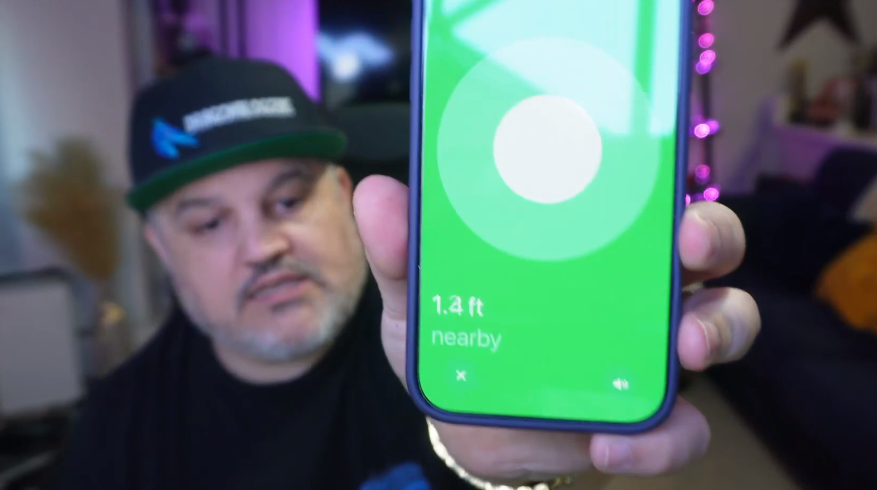
Compatible iPhones equipped for Precision Finding can provide even more guidance with the first-generation AirTag’s Apple-designed U1 Ultra Wideband chip. Rather than only telling you that the tracker is nearby, Precision Finding can guide you toward it with directional and distance information. Compatibility depends on the iPhone model, so this feature is not available on every device that can otherwise use AirTag.
The more interesting part of AirTag appears when the missing item is no longer in Bluetooth range. AirTag can use Apple’s Find My network, which relies on nearby participating Apple devices to securely relay the tracker’s approximate location back to its owner. That means a tracker attached to luggage or another lost item can potentially be located even when your own phone is nowhere near it.
Lost Mode adds another useful layer. If someone finds an AirTag, an NFC-capable smartphone can tap it and open information that the owner has chosen to provide for the lost item. That can give a helpful person a way to identify the tracker and potentially return what you lost without requiring the finder to own an iPhone.
Apple also designed AirTag around privacy and unwanted-tracking protections. Location information is not stored as a history on the AirTag itself, and Find My network communication is designed around encrypted and anonymous location reporting. Apple devices can also provide alerts about an unknown AirTag that appears to be moving with someone over time. These safeguards are important because a tracker that is good at finding objects also needs protections against misuse.
The physical tracker is tiny, measuring about 1.26 inches in diameter and 0.31 inch thick, with a weight around 11 grams for the original model. It is rated IP67 for splash, water, and dust resistance under specified laboratory conditions. That does not make it indestructible, but it is designed for the kind of everyday exposure a tracker on keys, bags, or luggage might encounter.
Battery maintenance is refreshingly straightforward. The first-generation AirTag uses a user-replaceable CR2032 coin cell rather than a sealed rechargeable battery. When the battery eventually runs low, you can replace it instead of throwing away the entire tracker or remembering to charge another gadget every few days.
There is one important limitation to understand before buying. AirTag makes the most sense inside the Apple ecosystem. You need a compatible Apple device and Apple Account to set it up and manage it properly. Android users can interact with certain safety and NFC functions, but AirTag is not intended to provide the same owner experience on Android that it does on an iPhone.
For iPhone users, however, the appeal is easy to understand. AirTag turns the huge installed base of Apple devices into part of a finding network while keeping the tracker itself small and simple. Put one with the item you are most likely to misplace and you gain several ways to look for it before assuming it is gone for good.
If keys, luggage, or backpacks have a habit of disappearing exactly when you need them, pick up an Apple AirTag on Amazon and give your important everyday items a much better chance of being found.
Or pick up the AirTag 2nd Generation if you have an iPhone 15 model or later which can take advantage of the features found in the 2nd Gen that older phone models are not able to.
We are influencers and brand affiliates. This post contains affiliate links, most which go to Amazon and are Geo-Affiliate links to nearest Amazon store.

My name is Alice and I have been into gaming since I first got the Nintendo 64 in late 1996 and enjoy writing about all things relating to entertainment, gaming and streaming. Lately you can find me playing mostly MMO’s like WoW, FFXIV or Black Desert Online when I have time to game.