
We are influencers and brand affiliates. This post contains affiliate links, most which go to Amazon and are Geo-Affiliate links to nearest Amazon store.
Did you know that you are sending code when you send an image? Yes, it may sound crazy, but computers do not understand what an image is. They do not know what sound is, and they do not understand it because they simply do not have consciousness. However, computers, and smart devices in general, can interpret one thing extremely well: code.
When you send any type of file, whether it is a video, an image, or an audio file, it is not as if the image itself is being sent directly. At least, that is not how it works internally. We see an image because our device is able to interpret the information.
So how is data really sent over the Internet?

As you may know, the global Internet is connected through submarine cables, and even satellites rely on them, since satellites ultimately connect to servers that then transmit information through these underwater cables.
This alone is impressive, because it is as if we were all connected through a LAN network, but across hundreds or even thousands of kilometers. It is truly a marvel of what humans have achieved.
Now, have you ever wondered what exactly happens when you share a file, whether through Instagram, WhatsApp, email, or any platform that allows file sharing between users?
The answer is binary code. Binary code is basically the language of computers, using 0s and 1s to represent any type of file. Even if you cannot see it, what really exists behind an image is a combination like 01101010 or something very similar.
Many platforms use binary data directly, but some, such as Gmail, use encodings like Base64 to convert binary data into text, because emails only allow text. Base64 is not binary itself, but rather a representation using letters and numbers that is later decoded back into binary.
To give you a clearer example, let us convert an image into Base64. The code basically tells the device exactly what color each pixel of the image is. It works like a very efficient translator.
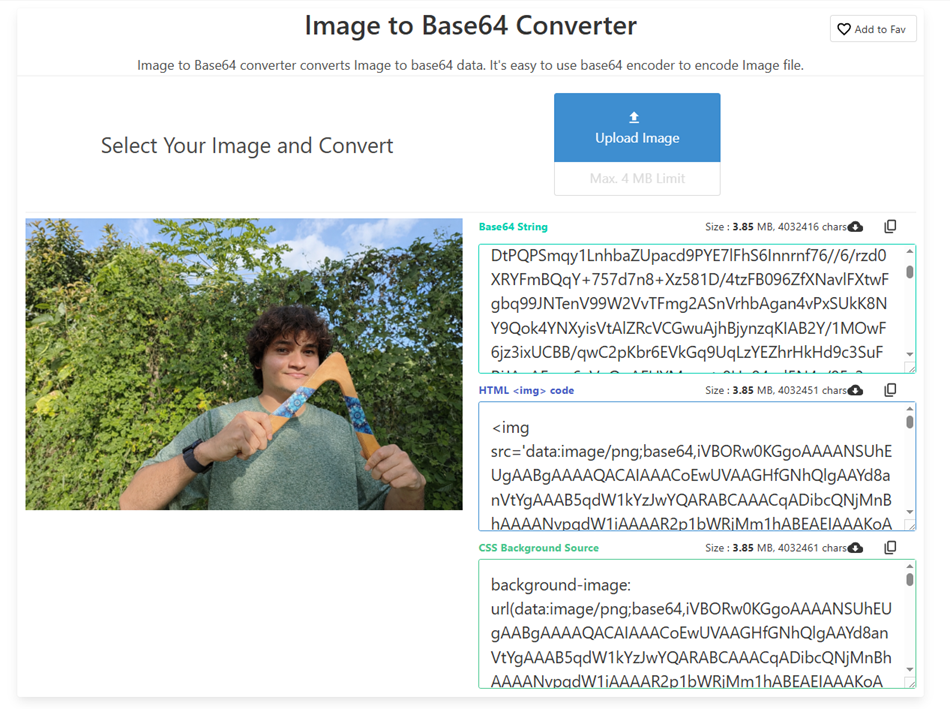
Using an image to Base64 converter, we obtained an impressive amount of more than 4 million characters, all for an image of just under 4 MB. Although it may seem like a huge number of characters, it is insignificant for a modern computer, which processes it almost instantly.
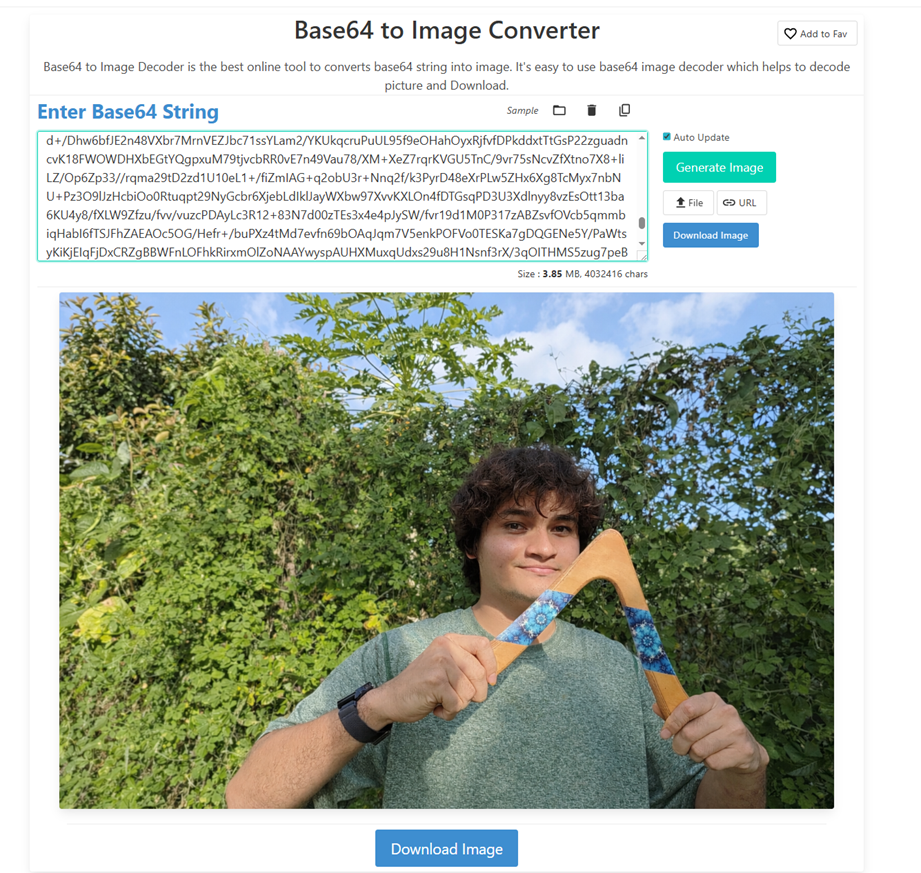
Here, we simply did the opposite process. That is, we took the Base64 code and converted it back into the image.
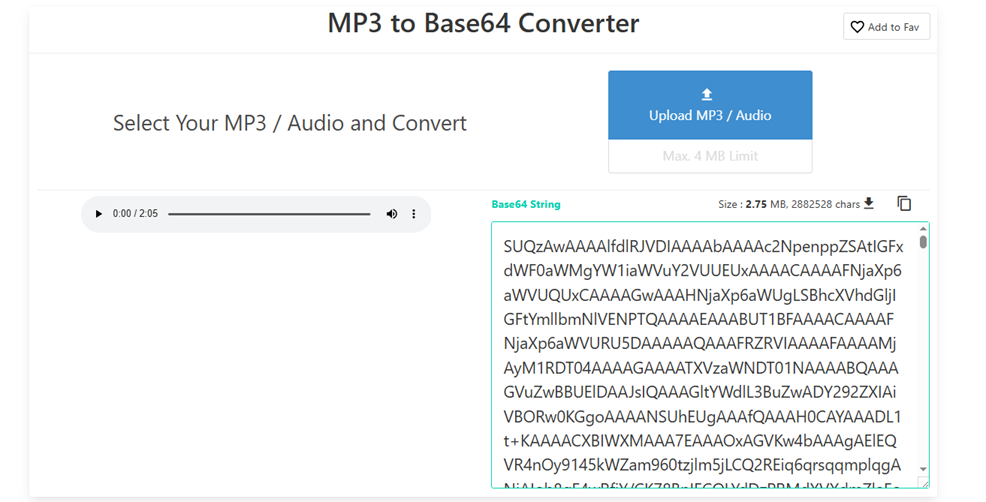
The same thing happens with audio files. Binary data is used, and in some cases encodings like Base64 are applied. Basically, the data is first decoded into binary if it was in Base64, then those binary data are interpreted according to an audio format such as MP3 or WAV, and finally the device converts that data into sound waves that we hear as audio, such as music or voice recordings.
We know this can be impressive if this is the first time you are reading about it, but this is how all files work, and we are talking about relatively small files. Remember that our computers can run highly demanding games or play videos in 4K and even 8K.
How Is Data Transmitted So Fast on the Internet?
Data traveling through submarine cables moves incredibly fast, almost at the speed of light. As you may know, the speed of light is close to 300,000 km per second, which is fast enough to go around the Earth about 7.5 times in just one second.
Of course, there are more complex concepts involved, such as pulses of light, which are what actually travel through submarine cables. However, with the information we have shared, we are confident that you will now see the Internet and technology in general in a very different way.
We are influencers and brand affiliates. This post contains affiliate links, most which go to Amazon and are Geo-Affiliate links to nearest Amazon store.

My name is Joel! I love to read, I go to university like most people my age.
In my free time I usually train boxing, I love music, I also know how to play the guitar and the harmonica.