
We are influencers and brand affiliates. This post contains affiliate links, most which go to Amazon and are Geo-Affiliate links to nearest Amazon store.
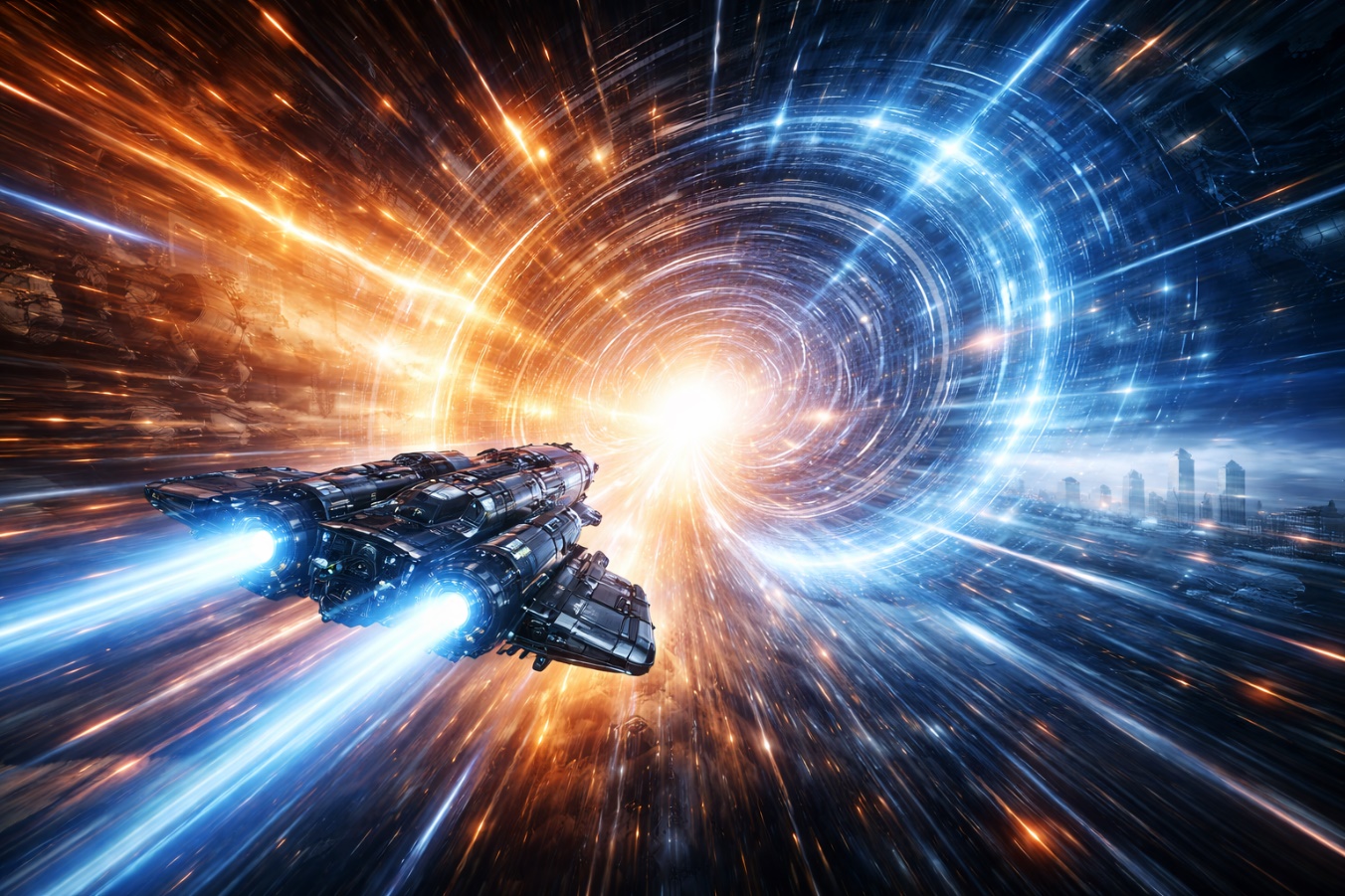
Time travel has been the focus of many science fiction movies, but most people do not know that physics actually allows travel to the future while forbidding travel to the past.
This is because there are two real ways, at least theoretically, to travel into the future. Before exploring them, it is important to understand a principle related to the limits of the speed of light.
What Happens When You Travel Near the Speed of Light?
To understand how strange the speed of light is, consider this analogy. If you are on a train moving at 100 miles per hour and you throw a ball at 10 miles per hour, the ball would actually move at 110 miles per hour to an outside observer. The speed of light, however, is the same for everyone. No matter how fast a spaceship is moving, light always travels at 299,792 kilometers per second.
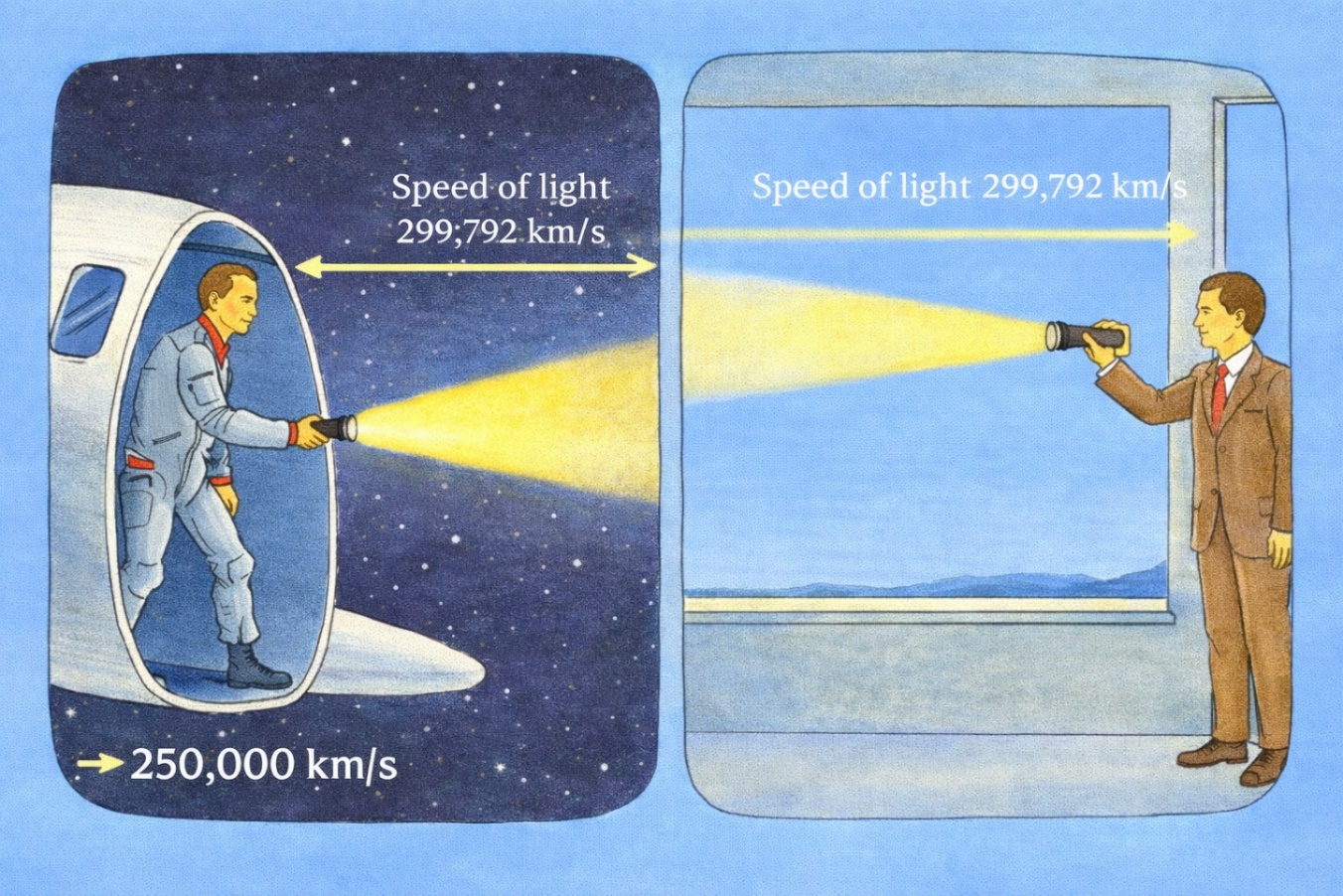
For this to hold true in the physics of the universe, something has to adjust. Distance and time are what change depending on the observer's speed.
This means that if a spaceship were hypothetically traveling close to the speed of light, the space in the direction it moves would contract, causing less time to pass for those on the ship compared to an observer on Earth. Meanwhile, someone on Earth would see time on the ship passing more slowly.
The strange part is that once the hypothetical astronaut returns to Earth, there could be a difference of decades, even though for them only a few months or years may have passed.

You have probably read or heard about the twin paradox. It is another analogy for understanding what could happen if a traveler moves through space at near-light speeds and then returns to Earth.
To keep it simple, just remember that speeds and distances are relative. In the universe, space and time can be measured differently depending on how fast an object is moving.
How Do We Know Traveling to the Future Is Possible?
We do not actually need to accelerate a spaceship to relativistic speeds, because this happens right here on Earth. For example, GPS satellites need to adjust their clocks. Interestingly, they experience two effects. Their speed, over 25,000 kilometers per hour, and Earth's gravity both influence time.
Speed alone would make their clocks run slower, but since they are less affected by gravity, their clocks actually run faster. They must be adjusted by about 38 microseconds per day to maintain accuracy.
You Are Traveling to the Future
When you run, you are already experiencing time dilation compared to a stationary observer. It is just not noticeable because it only becomes significant at extremely high speeds, close to the speed of light.
Black Holes
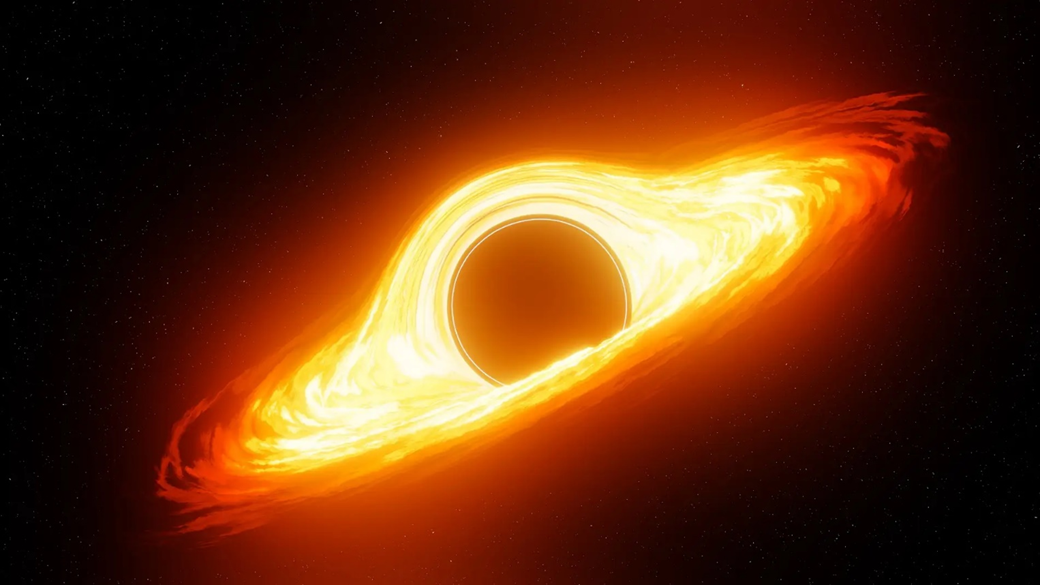
Black holes are among the strangest events in the universe. They form when a massive star collapses under its own gravity. Fortunately, our Sun will never become a black hole. It would need to have between 20 and 25 solar masses to have that terrifying potential.
How Could a Black Hole Enable Time Travel?
If you have seen Interstellar, you know the main characters travel to a planet very close to a black hole. Because of the intense gravity, time on that planet passes much slower than on Earth.
In the movie, one hour on Miller's planet near the supermassive black hole equals seven Earth years. In reality, it depends on the mass of the black hole and how close you are to it.
Hypothetically, if you were in that situation, spending just one day on such a planet under the black hole's intense gravity could mean that when you return to Earth, everyone you once knew might have passed away because 168 years would have gone by.
How Far Are We from Traveling to the Future?
Extremely far. To put it in perspective, the fastest spacecraft we have ever launched is the Parker Solar Probe, which reached a maximum speed of about 692,000 kilometers per hour. This is only 0.064 percent of the speed of light. It is still operational, studying the Sun.
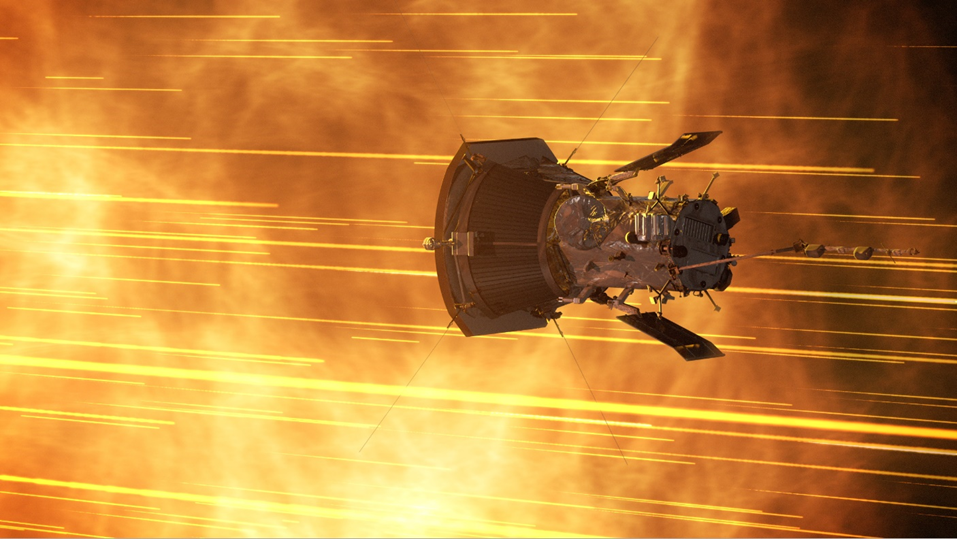
We are nowhere near even one percent of the speed of light, although speculative research is ongoing to develop prototypes that could theoretically reach a small fraction of light speed.
As for black holes, the closest one to our solar system is 1,560 light-years away. We are far from being able to approach one for time-travel purposes.
Will We Ever Travel to the Future?
I always say this when discussing the topic. We should not lose hope. Technology and science advance rapidly. Every day brings the chance of new discoveries, and maybe someday we will find a way to get close to the speed of light.
We are influencers and brand affiliates. This post contains affiliate links, most which go to Amazon and are Geo-Affiliate links to nearest Amazon store.

My name is Joel! I love to read, I go to university like most people my age.
In my free time I usually train boxing, I love music, I also know how to play the guitar and the harmonica.